 Nov 25,2025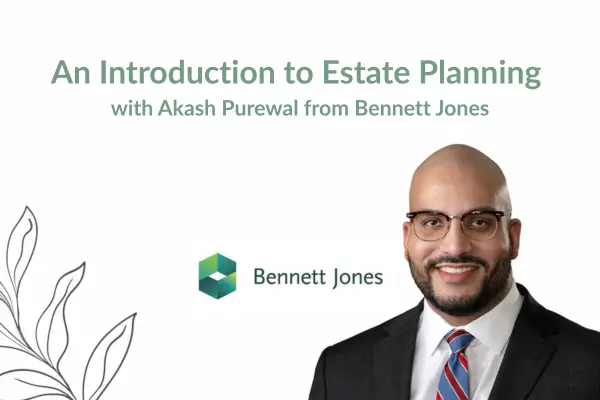
Estate planning is often seen as something you do “later” when you’ve built wealth, bought property, or reached a certain age. But as Akash Purewal of Bennett Jones reminds us, every Canadian already has an estate: the sum of your assets, your responsibilities, and, increasingly, your digital life. Planning early isn’t just about distributing wealth; it’s about reducing conflict, protecting loved ones, and preserving the stories and values that define your family.
In this narrative Q&A, we sat down with Akash to demystify the essentials: wills, powers of attorney, probate differences across provinces, family-business considerations, and the fast-emerging world of digital inheritance. You’ll also see how platforms like Aeternum help families safeguard photos, videos, voice notes, and life lessons so they don’t vanish behind forgotten passwords or retired devices.
If you’ve wondered when to start, what to include, or how to account for memories and online accounts, this primer is for you.
What exactly is estate planning , and why start sooner?
Aeternum Team: What is estate planning, and why is it important for Canadians to consider it sooner rather than later?
Akash Purewal: Estate planning is broader than most people think. It can be as complex as coordinating distributions for a large, multi-generational family, or as simple as ensuring a car, home, or treasured belongings reach the right people. The key is: everyone has an estate, not just people with significant wealth.
Starting sooner matters because estate planning isn’t “one and done.” Drafting an initial will and core directives early gives you familiarity with the process and a framework you can update as life changes. When you inevitably need to revise it, after a move, a marriage, a new child, or a change in assets, you’re not starting from scratch.
“Everyone has an estate. Planning early sets the foundation, and updates become easier when it counts.” — Akash Purewal
Myths that hold families back
Aeternum Team: What myths do you encounter most often?
Akash Purewal: The big misconception is that estate planning is only for older or wealthier people. In reality, valuable “estate items” include not only high-value assets but prized possessions and digital assets, the things you care about deeply and want to pass to specific people. Planning for those items now, not later, honours that intention and reduces disputes.
“It’s not just money and property — it’s your prized possessions and memories.” — Akash Purewal
The essential components of a Canadian estate plan
Aeternum Team: What are the essential components of a well-prepared estate plan in Canada? (e.g., wills, powers of attorney, trusts, etc.)
Akash Purewal: Legally, there are many details to get right, from how shares in a business will be handled to beneficiary designations for pensions and registered plans, and who makes health decisions if you lose capacity. Rather than rush a checklist, I encourage people to approach it with reflection: Who should receive what? Who should decide for me if I can’t? That thoughtfulness is what makes a plan durable and fair.
Practically speaking, most Canadians should consider:
- A Will (distribution of assets, choice of executor)
- Power of Attorney (Property/Financial)
- Personal Directive / Health Care Proxy (medical and personal decisions if you lose capacity)
- Beneficiary designations (RRSP/RRIF/TFSA, pensions, insurance)
- Business succession (if you own shares; see shareholders’ agreements below)
- Digital asset instructions (access and transfer plan for accounts and archives)
“The most important trait of a strong plan is that it’s well-thought-out, not rushed.” — Akash Purewal
Moving provinces or holding property across Canada
Aeternum Team: Laws differ by province. What should Canadians keep in mind if they move or own assets across provinces?
Akash Purewal: Start with probate costs and procedures, which vary. Some provinces charge a percentage of estate value; others charge flat court fees. Where your assets sit can affect whether it’s more efficient to transfer certain items during life or at death.
Equally important: consider tax implications for beneficiaries, e.g., capital gains exposure and cost base. When you hold property across Canada, it’s wise to involve a tax-savvy lawyer or accountant who understands interprovincial differences. Planning with professionals up front often saves beneficiaries time, cost, and stress later.
“If you hold property in multiple provinces, look carefully at probate costs and beneficiary tax outcomes, and get specialized advice.” — Akash Purewal
The family dynamics most likely to create conflict
Aeternum Team: What’s one of the biggest mistakes you see families make?
Akash Purewal: Not anticipating how family hierarchies and expectations have evolved. Historically, assets might have flowed to the eldest child by default. Today, the most involved child, perhaps a younger daughter who runs the family business, may inherit control or a larger share. If that shift isn’t discussed early, it can create incongruent hierarchies and resentment among beneficiaries. The antidote is open, early conversation.
“Have the hard conversations sooner. It’s easier than navigating conflict after the fact.” — Akash Purewal
Where do digital assets and Aeternum fit in?
Aeternum Team: How should families handle digital assets, online accounts, family photos, social media, and where does Aeternum fit in?
Akash Purewal: Digital assets have enormous intrinsic value, yet they’re often overlooked. Without a plan, photos, videos, and voice notes get locked behind passwords or stranded on devices. Bringing platforms like Aeternum into the conversation keeps these assets front of mind, ensuring there’s a process to pass them on securely and privately. That’s a major shift from the past, when digital memories often died with a device.
“Don’t let a lifetime of memories get trapped behind a password. Plan their transfer like any other meaningful asset.” — Akash Purewal
The new challenges of digital inheritance
Aeternum Team: What challenges are emerging as digital inheritance becomes common?
Akash Purewal: We’re among the first generations to treat digital accounts as estate assets. This includes questions about access (Who can log in?), personhood and brand (Should an influencer account continue?), and platform rules that tie accounts to an individual. The solution is not speed, but thoughtfulness: take time to inventory digital assets, document access and wishes, and decide what passes to whom, and what should be memorialized or closed.
Practical tips:
- Maintain a secure inventory of key accounts and subscriptions.
- Use legacy tools where available (e.g., assigning a legacy contact; storing export keys).
- Choose a private archive (e.g., Aeternum) for family media and life lessons.
- State intentions in your will/memorandum regarding digital property.
“Isn’t estate planning just for the wealthy?”
Aeternum Team: What do you say to families who think estate planning is only for people with mansions, cars, and businesses?
Akash Purewal: Estate planning is about people, not just property. Yes, Canada provides a default succession path if you die without a will, but that often collides with verbal promises and expectations, breeding conflict. Everyone has assets (including digital ones), and everyone’s beneficiaries benefit from clarity. A clear, customized plan is a gift to the people you love.
“Estate planning prevents avoidable disputes, for every family, not just wealthy ones.” — Akash Purewal
Related reading: What Will You Leave for Future Generations?
Beyond houses and money: stories, values, and… golf memberships?
Aeternum Team: How do stories, traditions, and other ‘non-financial’ items fit into planning?
Akash Purewal: They’re central. I’ve even seen golf memberships with long waitlists treated as pass-along assets. But the bigger theme is intangible inheritance, the family stories, values, rituals, and advice people most want their loved ones to carry forward. A platform like Aeternum helps families intentionally preserve that “emotional estate” alongside the financial one.
“The memories and values people most want to pass down deserve a secure, intentional home.” — Akash Purewal
Related reading: What Would You Tell Your Future Grandchildren?
DIY wills vs. engaging a professional
Aeternum Team: Many people try to draft wills themselves. When should a legal professional be involved?
Akash Purewal: I’m biased, but engaging a professional early prevents the most painful outcomes, disputes over a will at the worst possible moment. Even if the budget is tight, consider a review by a lawyer or estate planner. Often, the biggest value is the questions a pro knows to ask: beneficiary design, guardianship, contingencies, digital access, business interests, and more.
“Even a one-time professional review of a DIY will can surface critical gaps.” — Akash Purewal
What to consider beyond the will
Aeternum Team: Besides a will, what other mechanisms matter?
Akash Purewal: Two tracks:
1) Personal planning:
- Power of Attorney (Property/Financial) to manage finances if you lose capacity.
- Personal Directive / Health Care Proxy to name decision-makers for medical choices.
2) Family-business planning (if applicable):
- Shareholders’ agreements should spell out exactly what happens upon a shareholder’s death, buy-sell mechanics, valuation, rights of first refusal, and continuity provisions. Even with agreements, administration can be complex; without them, it can stall operations and spark conflict.
“In family businesses, a robust shareholders’ agreement is not optional, it’s oxygen.” — Akash Purewal
How technology is changing legacy
Aeternum Team: As platforms like Aeternum and social tools evolve, how will Canadians think differently about legacy?
Akash Purewal: Technology will make legacy more intentional. People will design their digital inheritance as carefully as their financial one. Choosing what should be preserved, who can access it, and when. Using a private, family-first tool like Aeternum means memories aren’t scattered across apps or lost to password resets. It also lightens the administrative burden on grieving families.
“Assume nothing is automatically saved, build a system that preserves what matters.” — Akash Purewal
Related reading: What Will You Leave for Future Generations?
One piece of advice for Canadian families
Aeternum Team: If you could offer one piece of advice to Canadian families, what would it be?
Akash Purewal: Plan early, and revisit often. A will drafted today may not fit your life a decade from now. Revisit your documents, refresh beneficiary designations, and continue the conversation with family so expectations are clear. Transparency now can prevent delays, legal costs, and hurt feelings later.
“Plan early. Revisit often. Talk openly.” — Akash Purewal
Quick-start checklist: Build (and maintain) your plan
- Inventory assets (financial, property, business interests, and digital accounts/media).
- Draft a will and name an executor; consider guardianship where relevant.
- Establish a POA (property/financial) and a personal directive/health proxy.
- Document digital wishes and store keys/access instructions securely.
- Align beneficiary designations on registered accounts and policies.
- For family businesses: review shareholders’ agreements for death/exit clauses.
- Review annually or upon life events (marriage, children, relocation, major purchases/sales).
- Centralize memories in a private archive like Aeternum; invite trusted contributors.
How Aeternum complements your legal plan
Legal documents answer who gets what and who decides when. Aeternum answers what you want them to remember, securing the photos, videos, audio messages, and letters that carry your values forward. Think of it as the emotional layer of your estate plan:
- Family Vault: one private home for life’s media and stories
- Post-mortem Messages: schedule messages or memories for future milestones
- Family Tree & Context: connect people, places, and wisdom across time
For most Canadians, estate planning isn’t about riches; it’s about readiness and relationships. As Akash emphasizes, a clear plan protects loved ones from avoidable conflict and confusion, especially when families are grieving. It also reflects the reality of modern life: our legacies now include digital assets and emotional heirlooms, stories, values, and voices worth safeguarding.
Start with the fundamentals: a will, powers of attorney, and clear directions for healthcare and business interests. Then give equal weight to the emotional estate: capture the memories and wisdom only you can share, and preserve them in a private, secure place your family can trust.
Plan early. Revisit often. And don’t leave your legacy to chance.
When you’re ready to add the human layer to your estate plan, explore Aeternum <link to sign up> and begin building a digital inheritance that lasts.
Legal & Editorial Notes
This article reflects a narrative conversation and general information only; it is not legal or tax advice. Laws, fees, and procedures differ by province and change over time. Please consult a qualified lawyer and/or tax professional for advice specific to your situation. Akash Purewal’s participation does not create a solicitor-client relationship with readers.